Author Archives: Becky Butler Gallegos

Zoom with your Reference Librarian

Working on a particularly gnarly research problem? Tired of typing out your assignment description every time you chat with the library? Try a Zoom session with the reference librarians!

We get it — sometimes you just need to talk to a real person. So, start your session by emailing us or chatting with us. You’ll be able to connect with a real-life, individual person during the posted reference hours. For the fall semester, that ‘s 9-10 Monday-Thursday, 9-6 Friday, 10-6 Saturday, and 12-10 Sunday. You can then request a Zoom session and we’ll accommodate as we’re able.

We can screen share to walk you through using the library resources and talk through your research questions. Sometimes when you’re overwhelmed, you simply need a friendly face.

Give it a try!

What does Virtual Reference MEAN?

Welcome back, Seawolves!

You may have seen the signs, blog posts, and emails that the Consortium Library is still providing reference services virtually. Curious about what that means? Read on!

First of all, you can still reach the reference librarians for research help and project assistance by email and phone. Email us using this form, text us at 907-312-1024, or call us at 907-786-1848.

You can also use the Chat available on the website. If you’ve never found this before, there are a couple of places to go on the library website. You can go to the Ask Us page and click the green “Chat is Online” button. The button will be grey if the Virtual Reference Desk is closed.

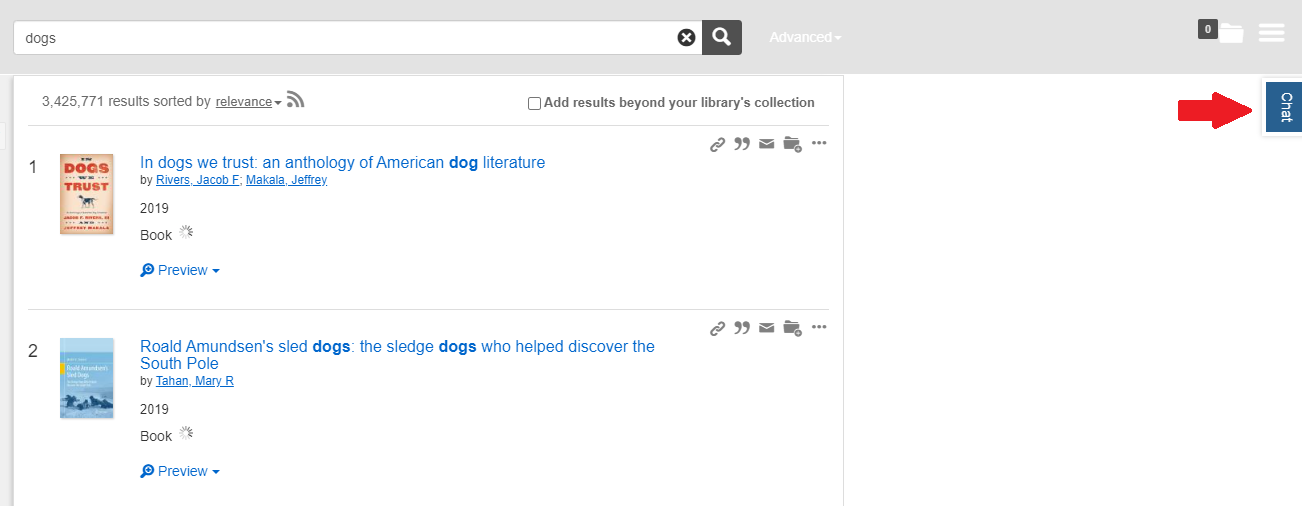
You can also access the chat when you’ve already started your catalog search. Just look to the right-hand side of your screen for the blue “Chat” button.

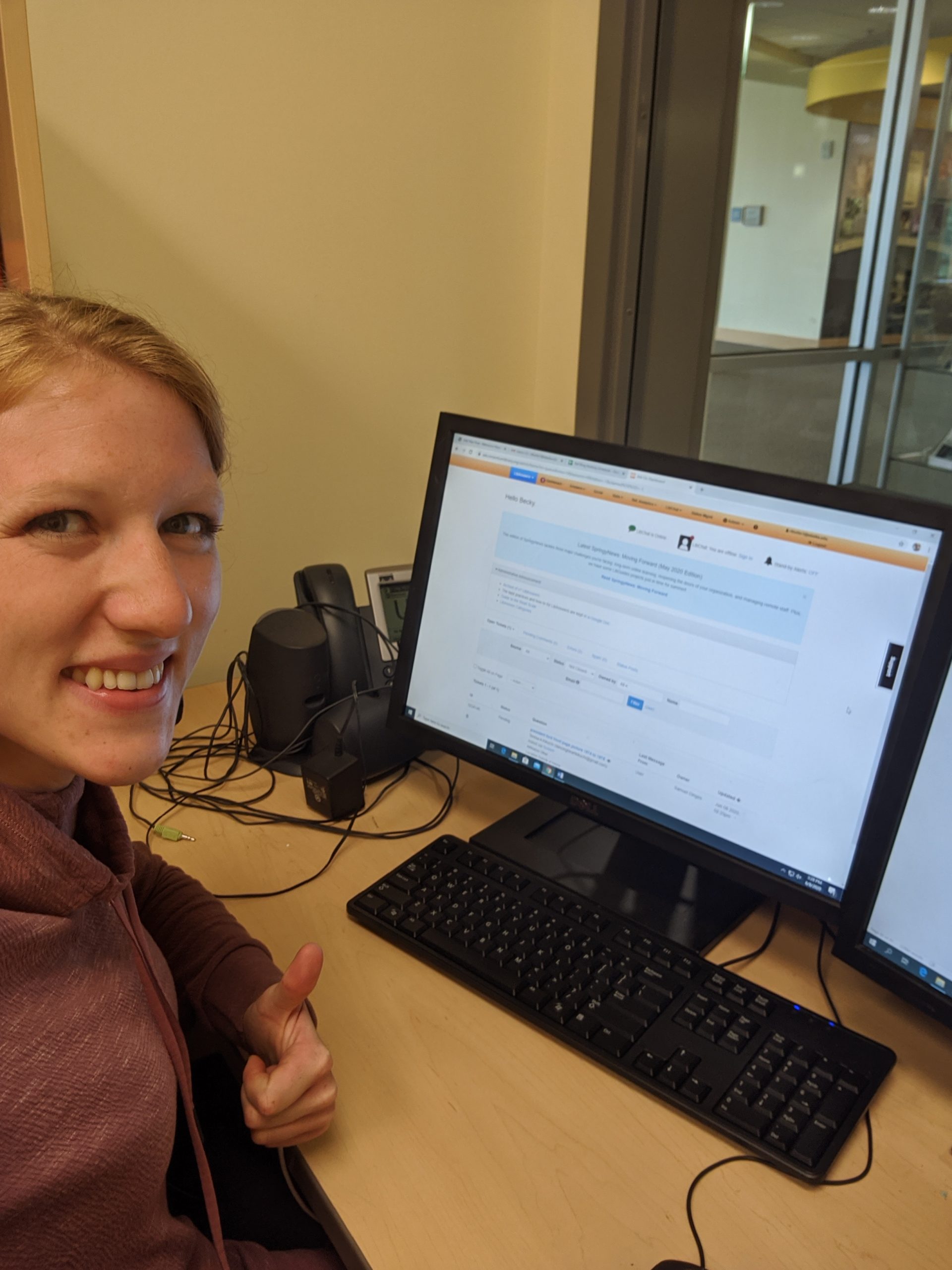
Once you start a chat, one of our friendly reference librarians receives it and begins assisting you as soon as possible. Exhibit A: me, checking the chat for new messages.

The reference librarians can assist in live time and even start up a screen sharing session if you have a really gnarly research query. We generally have other projects to work on while we wait for research questions, but we are available primarily to assist YOU, however you decide to contact us!

The virtual reference hours for the fall semester are Monday-Thursday 9am-10pm, Friday 9am-6pm, Saturday 10am-6pm, and Sunday 12pm-10pm.https://tenor.com/ZPKw.gif

If you’re ever uncertain about whether or not to use the chat or send the library an email, know that our staff is eager to help you. We can’t wait to hear from you!

Reference Summer Reading Picks

Happy summer, everyone! With classes being over, it’s time to do some reading for fun. Here are some selections to fit whatever mood you’re in.

(Library insider secret: librarians call conversations with library users about what to read next “reader’s advisory.” It’s often a librarian’s favorite part of the job because we get to share books we love and think you will, too!)

Feeling revolutionary?
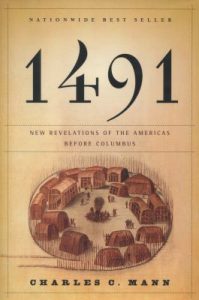
1491 by Charles C. Mann (E61.M266 2005)

“Mann shows how a new generation of researchers equipped with novel scientific techniques have come to previously unheard-of conclusions about the Americas before the arrival of the Europeans: In 1491 there were probably more people living in the Americas than in Europe. Certain cities — such as Tenochtitlán, the Aztec capital — were greater in population than any European city. Tenochtitlán, unlike any capital in Europe at that time, had running water, beautiful botanical gardens, and immaculately clean streets. The earliest cities in the Western Hemisphere were thriving before the Egyptians built the great pyramids. Native Americans transformed their land so completely that Europeans arrived in a hemisphere already massively “landscaped” by human beings. Pre-Columbian Indians in Mexico developed corn by a breeding process that the journal Science recently described as “man’s first, and perhaps the greatest, feat of genetic engineering.”
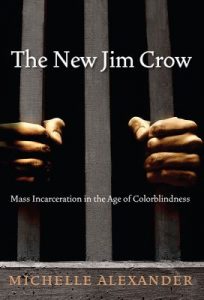
The New Jim Crow by Michelle Alexander (HV9950.A437 2012)

“This work argues that the War on Drugs and policies that deny convicted felons equal access to employment, housing, education, and public benefits create a permanent under caste based largely on race.As the United States celebrates the nation’s “triumph over race” with the election of Barack Obama, the majority of young black men in major American cities are locked behind bars or have been labeled felons for life. Although Jim Crow laws have been wiped off the books, an astounding percentage of the African American community remains trapped in a subordinate status – much like their grandparents before them. In this incisive critique, former litigator-turned-legal-scholar Michelle Alexander provocatively argues that we have not ended racial caste in America: we have simply redesigned it. Alexander shows that, by targeting black men and decimating communities of color, the U.S. criminal justice system functions as a contemporary system of racial control, even as it formally adheres to the principle of color blindness. The New Jim Crow challenges the civil rights community – and all of us – to place mass incarceration at the forefront of a new movement for racial justice in America.”

Feeling beach-y?
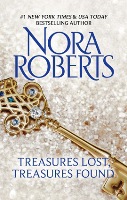
Treasures Lost, Treasures Found by Nora Roberts (Available online)

“Kate Hardesty had inherited a pile of mysterious ocean charts. Her practical, no-nonsense father had had a dream–sunken treasure–and he’d left a map leading to a gold-laden ship.Determined to complete her father’s explorations, she turned to the only man with the ability to tackle the treacherous dive deep beneath the Atlantic: Ky Silver.Kate had left Ky four years ago, frightened of the needs he awoke in her, yet now she needed him more than ever. But working with Ky meant more than searching for gold pieces–it meant plunging her heart into the depths of love….”
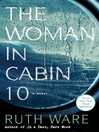
The Woman in Cabin 10 by Ruth Ware (Available online)

“From New York Times bestselling author of the “twisty-mystery” (Vulture) novel In a Dark, Dark Wood, comes The Woman in Cabin 10, an equally suspenseful and haunting novel from Ruth Ware—this time, set at sea.In this tightly wound, enthralling story reminiscent of Agatha Christie’s works, Lo Blacklock, a journalist who writes for a travel magazine, has just been given the assignment of a lifetime: a week on a luxury cruise with only a handful of cabins. The sky is clear, the waters calm, and the veneered, select guests jovial as the exclusive cruise ship, the Aurora, begins her voyage in the picturesque North Sea. At first, Lo’s stay is nothing but pleasant: the cabins are plush, the dinner parties are sparkling, and the guests are elegant. But as the week wears on, frigid winds whip the deck, gray skies fall, and Lo witnesses what she can only describe as a dark and terrifying nightmare: a woman being thrown overboard. The problem? All passengers remain accounted for—and so, the ship sails on as if nothing has happened, despite Lo’s desperate attempts to convey that something (or someone) has gone terribly, terribly wrong… With surprising twists, spine-tingling turns, and a setting that proves as uncomfortably claustrophobic as it is eerily beautiful, Ruth Ware offers up another taut and intense read in The Woman in Cabin 10—one that will leave even the most sure-footed reader restlessly uneasy long after the last page is turned.”

Feel like heading to the kitchen?

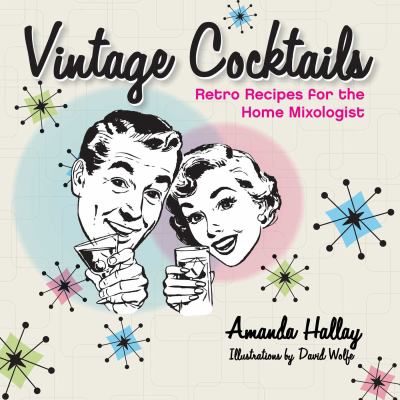
Vintage Cocktails: Retro Recipes for the Home Mixologist by Amanda Hallay (TX951.H2236 2011)
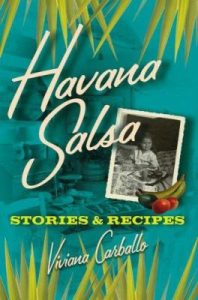
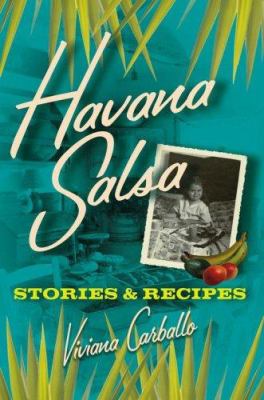
Havana Salsa: Stories and Recipes by Viviana Carballo (TX716.C9 C37 2006)

Still not seeing anything that catches your eye? Chat with our Virtual Reference librarians here!

Happy reading!

Finding Books while Staying Safe

You’ve probably heard that the library remains open to student use during the COVID-19 pandemic, but did you know there are certain services you can use to stay safe?

  • Don’t come in unnecessarily

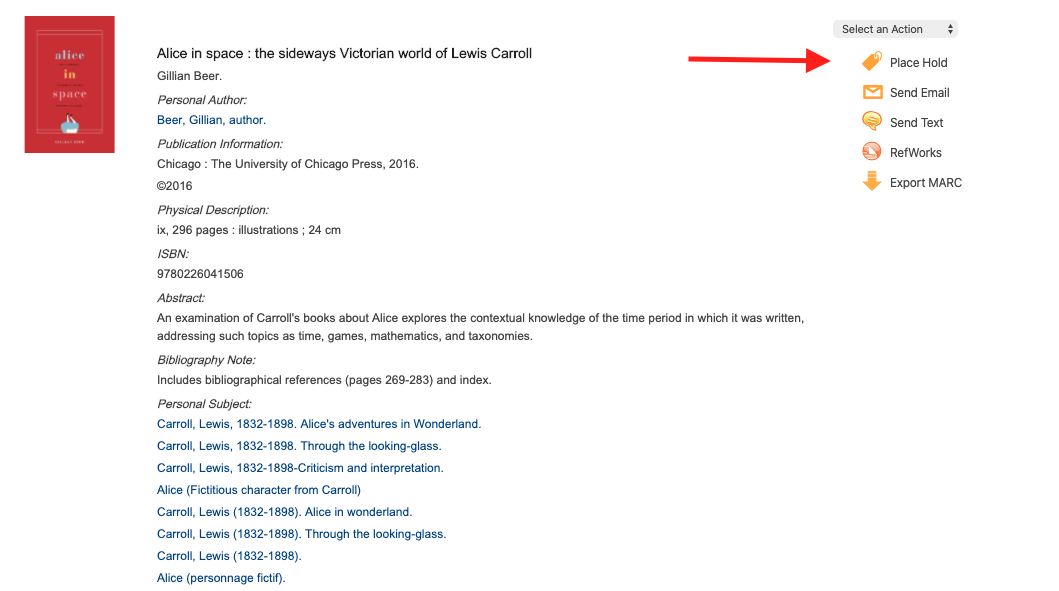
Need a book from the library but don’t want to come in without knowing you can have it for sure? You can tell if the book you want is still in the library by doing a search at consortiumlibrary.org. Once you find your item in the list of results, click on it.

As you can see by the red arrows, there are two key pieces of information. First, you can see which library the book is available at under the “Location” column. Your UAA or APU ID will get you into the UAA/APU Consortium Library, so be sure your item is listed there.

Second, you can tell if the item is available on the shelf in the information to the right of the location. If someone else has the item, it will say “Checked Out” with a due date next to it.

If your item is checked out, try searching the Ebooks or Alaska’s Digital Library!

  • Have items waiting for you

If the item you want is checked out by someone else, or if you want to be sure it will be waiting for you at the Circulation Desk when you visit, you can place a hold. 

To place a hold, check to see if there’s a “Place Hold” button in the upper right hand corner of the item’s catalog entry. If there is, click on it. It will ask you to provide your UAA ID number and PIN,  and then ask where you want to pick up your item. Make sure it delivers to the UAA/APU Consortium Library. If you don’t know your PIN, contact the Circulation Desk at 786-1871. 

You will receive an email when your item is ready for pick-up. You may then head to the Circulation Desk to check out your item. Don’t forget your ID to get into the building.

Stay healthy, my friends!

Scholastic Self-Care and Research Help

We know how it is. Your spring break is unexpectedly extended, you may have to deal with housing issues, and you STILL have homework due?!  That big research project you’ve been avoiding thinking about is probably due in less than a month. Enter full panic mode!

via GIPHY

Never fear — the Consortium Library Research Help Desk is here! Our reference librarians are available at the desk on the first floor of the library Monday-Thursday 9 am – 8 pm, Friday 9 am – 5 pm, and Saturday-Sunday 1 pm – 6 pm. Still looking for sources? Worried about how much information you have to wade through? Confused about how to use all the information you’ve found? And how in the world do you cite things? No matter what stage of research you’re on, we can help.

On that note, DO chunk your project up into bite-sized pieces. It’s easy to feel paralyzed by stress and anxiety, so set attainable daily goals for yourself. Identify 5 articles you could use one day, skim them the next, then write a paragraph summarizing what you learn from them on the third day. It may mean breaking a college-career-long habit of writing things at the last minute, but why make things harder for yourself right now? Give yourself some scholastic self-care.

If you’re working on some super specialized research, try reaching out to one of our subject librarians. They’ve specialized their research help based on discipline, and appointments with them could completely change the scope of your research (and hey, maybe bump you up a letter grade!).

We get it — sometimes it’s hard to leave your house or the coffee shop when you’re in the zone (or quarantined). You can also reach out to the reference librarians by email, chat, and phone. Click here to find out how. 

We’re all in this together. Take care of yourselves and each other. Go Seawolves!